Beginner’s Guide to Handbag Collecting
The do's and dont's of designer handbag buying
Want to avoid:
A) Brands that reduce quality, yet increase price?
B) ‘Quiet Luxury’ bags that are quietly boring?
C) Bags that are not authentically handmade?
Well love,
you no longer need to suffer.
Trust me, boring, expensive, inauthentic bags will make anyone want to avoid being a victim.
Here are the top 5 Handbag Luxury Rules
to consider before making
your next designer handbag purchase.
1. BUY DIRECT TO AVOID COUNTERFEITS
Buy directly from the designer can save you and someone’s life.
If you don’t personally know and trust the person reselling a handbag, buying directly from the brand is the safest way to keep a real collection. Many bags sold by resellers are counterfeit—often passed along without the buyer even knowing. Some resale sites try to authenticate bags. However, many do not catch everything. Counterfeit goods are illegal in the U.S.
According to U.S. Customs, “counterfeit goods are often manufactured to fund criminal enterprises…. Purchasing authentic goods through reputable sellers supports U.S. growth....”
That fake dupe trend everyone loves on Tik Tok? Or that one fake bag you almost were tempted to buy while traveling abroad? High chances those bags are illegal fundraisers for gangs and criminal organizations. Yes, the mob. The profits from counterfeit goods help fund most of their illegally operated factories that often use forced labor and unsafe working conditions. A lower price does not change where these bags come from.
I even heard recently that France is starting to imprison and fine people with counterfeits! Extreme? Definitely. How to avoid? Tell that friend to stop buying counterfeits or atleast get them authenticated if they look remotely similar to the real thing.
When you buy directly from the designer, you avoid all of this. You know your bag is real. You protect your mind and future investments by supporting the original designer and work behind the piece.
2. COLOR MATCHING
From a designer’s point of view, color is the foundation of a handbag’s longevity. A well-chosen color should move effortlessly from day to night and support the way you actually live, not just the trend of the season. Neutrals with depth—such as blush, black, or emerald—work because they pair naturally with both professional and evening wardrobes while aging beautifully over time.
When a standard color doesn’t fully reflect your personal style, a bespoke handbag becomes the most direct path to getting it right. Commissioning a piece through a reputable design house allows you to select precise tones, textures, and finishes that align with your wardrobe and lifestyle. With experienced designers guiding the process, your vision is translated into a finished piece without sacrificing quality, craftsmanship, or the integrity of the design.
3. MAINTENANCE
Handbags that are a year or older often lose their original gleam not because they’re aging—but because they’re being stored incorrectly. Leather is a natural material. It reacts to air, light, humidity, and friction, even when it’s not being worn.
When a handbag is left exposed—on a shelf, a hook, or the back of a chair—its leather can slowly dry out, fade, or dull, and metal hardware can oxidize over time. This happens faster when bags are stored uncovered or exposed to sunlight and open air.
The simplest way to preserve a handbag is to store it properly after each use. Place it back into its dust bag and keep it lightly structured. Dust bags protect against light exposure, dust particles, and moisture changes, all of which affect leather and hardware over time. Less air and less light help the bag maintain its original color, finish, and feel.
If you rotate your handbags, this matters even more. A well-made bag can last decades when stored correctly, retaining its shape, sheen, and hardware integrity. Proper storage isn’t about being precious—it’s about respecting the materials and craftsmanship so your bag remains beautiful.
4. COUNTRY OF ORIGIN
This is a difficult rule for many buyers, but it matters if you care about true luxury and long-term value. As a general guideline, a luxury handbag priced over $1,000 should be designed and produced in the brand’s original home country. Craftsmanship, training, and design standards are deeply tied to place. An American luxury brand making handbags in America, or an Italian house producing in Italy, reflects continuity between design intent and execution.
When a brand produces outside its home country, transparency becomes essential. If production is moved abroad without clear ownership of an atelier or direct oversight, the finished product often reflects different labor standards, material sourcing, and quality control—whether or not the price suggests otherwise. In these cases, a foreign-produced handbag should not be priced at the same level as one made under the brand’s original production standards unless the brand clearly states that it owns and operates the atelier in that country.
For collectors, knowing where and how a handbag is made allows you to understand who touched it, who supervised it, and how closely the designer was involved in its creation. If the designer records their progress in another country of origin based on the bespoke needs of the customer, this can also justify the price. Country-of-origin clarity protects brand integrity, ensures designer oversight, and preserves the heritage that gives a luxury piece its meaning and authenticity.
A handbag is not only an accessory; it is a record of craftsmanship. When design, production, and oversight remain connected to the brand’s origin, the result is a piece that holds its value—both materially and historically—over time.
5. A SIGNATURE STYLE
If you are going to pre-order a handbag for your collection, choose one with a clear signature. A true designer handbag is recognizable without needing a logo. It has a shape, proportion, or construction detail that quietly signals who made it.
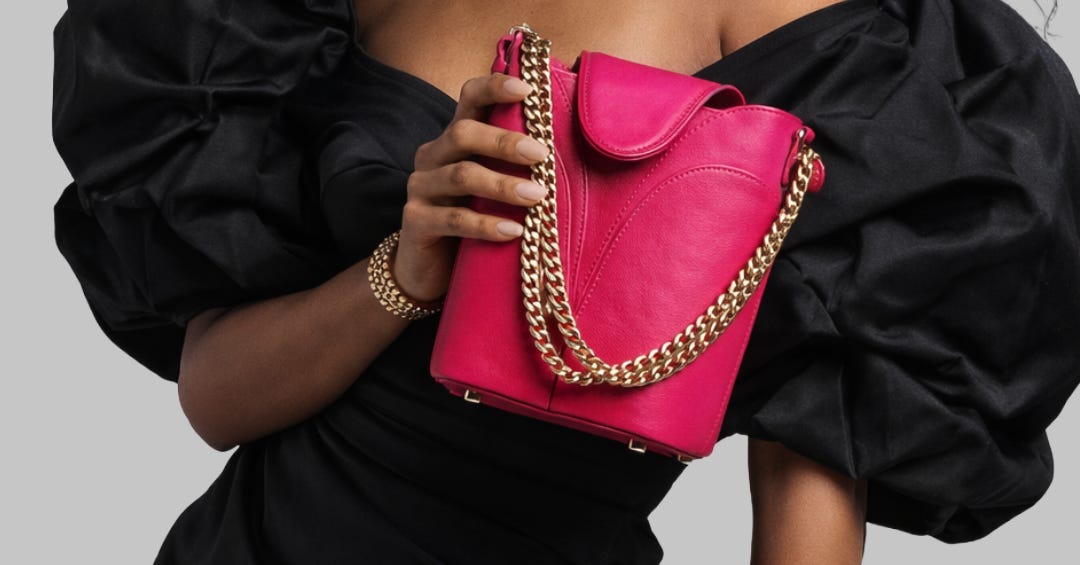
For example, Liselle Kiss handbags are known for sculptural yet feminine silhouettes—structured, curved, and intentional. This is not decoration for decoration’s sake. Signature design comes from a designer repeating a point of view over time until it becomes unmistakable.
Collectors have always understood this. Women like Jackie Kennedy, Grace Kelly, Audrey Hepburn, Elizabeth Taylor, Princess Diana, and didn’t buy handbags to follow trends. They invested in pieces that reflected their posture, lifestyle, and identity. Their bags complemented who they were, not what was popular.
This is also why bespoke handbags attract a specific type of buyer:
– Women marking milestones—marriage, legacy, reinvention
– Professionals who value discretion and personal symbolism
– Collectors who understand craft, not hype
– Families commissioning heirloom pieces meant to last decades
A bespoke handbag is not rushed. It is designed, refined, and handmade with intention. That process takes time—and that time is part of the value.
If you didn’t know, you can go bespoke:
A bespoke handbag rarely enters a woman’s life through impulse. It usually appears after something has shifted—her style, her pace, her sense of what belongs. Often it follows a milestone. Sometimes it arrives quietly, when fewer things feel interchangeable and personal taste begins to sharpen.
Bespoke handbags typically range from $3,000 to $25,000 because each piece is made specifically for one person. Materials are sourced intentionally, the work is done by hand, and the designer remains closely involved from beginning to end. Time and craftsmanship are built into the process, which places bespoke in a category of its own.
People approach the purchase in different ways. Some place the handbag on a credit card and collect points or travel perks. Others plan for it the same way they would anything meaningful. Either way, when a handbag truly fits, people make room for it.
Because these handbags are made slowly, with care, and they often stay close to becoming part of family history rather than donation.
Final Takeaway:
Adding a designer handbags to your collection elevates more than your wardrobe. It sharpens your visual identity, deepens the meaning behind what you wear, and often becomes one of the most enduring pieces you own.
And perhaps most importantly—it is a rewarding experience. Creating alongside a design team allows you to translate your taste, history, and vision into a piece that exists nowhere else.


Insider tips on collecting handbags: https://open.substack.com/pub/lisellekiss/p/beginners-guide-to-designer-handbag?r=6gxh84&utm_medium=ios&shareImageVariant=overlay