

Why I’m Ignoring the Traditional Fashion Calendar
Americans are the #1 spenders of luxury handbags globally — 90% went to overseas to conglomerates.

Here’s what happened years ago, before I wrote this.
1. The slow realization
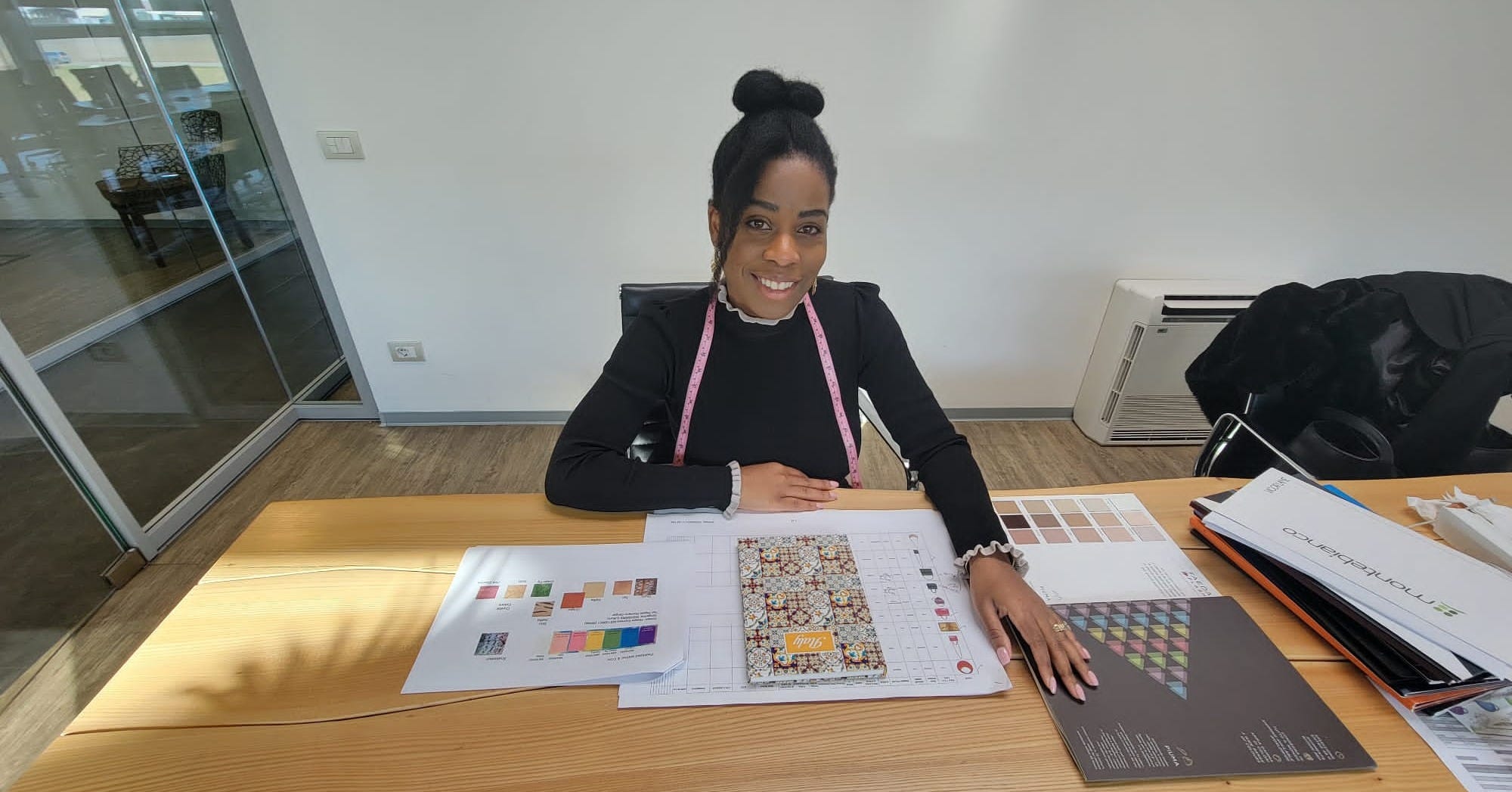
I knew my corporate fashion marriage was over when I started designing for a season I hadn’t even lived through yet. Summer bags in January. Fall colors in April. I was sketching for a woman who didn’t exist yet, in a moment that hadn’t arrived, for a trend report that clashed with my creativity. That’s when I realized — this wasn’t a creative partnership. It was an arranged marriage.
2. The dinner table moment
Have you ever sat at a dinner table pretending everything is fine while internally drafting your exit plan? That was me with the fashion calendar. Smiling at “Resort drops.” Nodding at “Pre-Fall capsules.” Meanwhile, I was exhausted. Not from designing — from keeping up with "what’s in.”
I could care less, as I saw myself as a human being
who so happen to wear what she wants at any time.
3. The corporate wake-up call
The moment I knew I wanted out was when someone asked me, “What’s your Q3 launch strategy?” I’m an artist. Not a quarterly earnings report. That question told me everything. I wasn’t building legacy pieces. I was feeding a fashion giant.
4. The closet test
I opened my own closet one day and saw last season’s “trends” sitting there like a ghost of a corporate stylist’s past. That’s when I knew — the calendar wasn’t serving anyone. It was consuming me and those who I was creating it for.
AND NOW— LET’S GET TO TODAY’S ARTICLE- LK💋
Why I’m Divorcing the Fashion Calendar
Americans are the #1 spenders of luxury handbags | 90% went overseas to conglomerates.
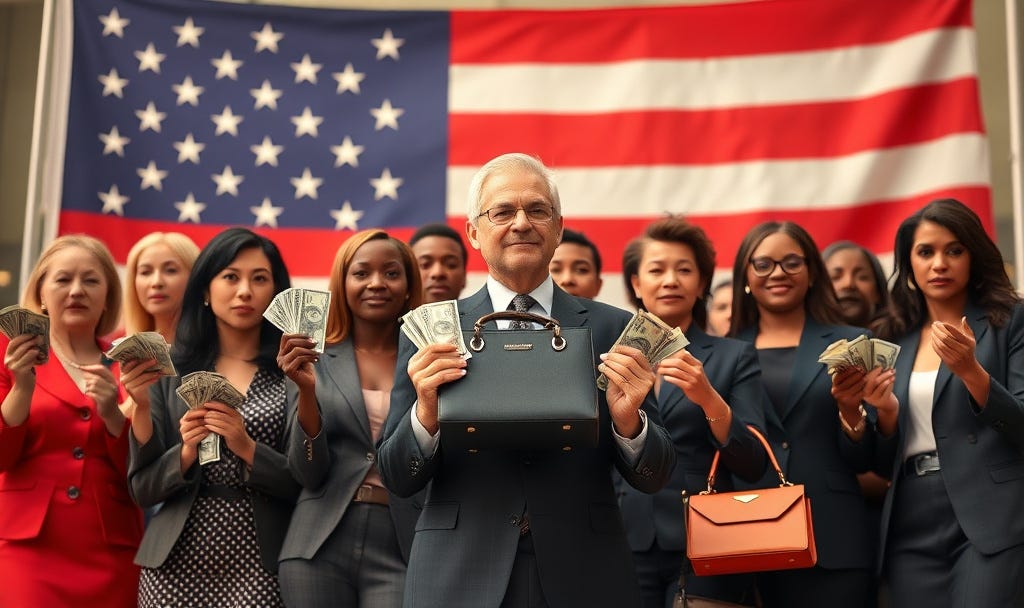
There’s a certain kind of silence that falls over a room when you hear someone say they lost millions dollars. Even if it’s not your money, it still hits.
Then comes that quiet tickle, the one that makes you want to start asking questions.
I get tickled as an American Designer when I’m compared to Hermès and Chanel — and writing this now — because I’m done being compared as an artist to conglomerates.
Here are three reasons why I’m burning the furniture of my arranged marriage to the fashion calendar — even after I already walked down the aisle as an American Designer.
1) We were fooled.
Last year, Americans retained their ‘status’ as the world’s #1 consumption of luxury handbags over $1000. No surprise. When I found this out at first- I was extremely proud. We were taking home the American Gold Medal.
We have the appetite, the capital, and the “eye” even if everyone besides us is shouting in our ear about how bad the economy is. It doesn’t matter.
We will spend because we work hard and deserve it— that’s why.
But here is the truth no one will tell you:
90% that same millions spent on luxury handbags over $1000 by Americans, was wired overseas to “heritage” luxury conglomerates.
Ok… so we like heritage that much— right?
90% is quite significant to give to someone’s heritage.
What got me here, when I found out this statistic is that— this heritage didn’t go to European artists, shops, small businesses.
It was instead a sacrificial offering to show our ‘status’ to the Conglomerates.
So therefore, Americans, are effectively paying a 90% annual alimony to mass market luxury chains that have penetrated the American market in the same fashion that Mcdonald’s has around every corner.
Surprisingly, 90% of faithful logo wearers, and most others who do not care about logos, like me, didn’t realize that the American luxury market never gave itself a chance to not be the world’s luxury ATM.
So… how did we get here?
Well. Here’s what happened. They sell us the “trendy” pieces in new colors every fashion week. We send them the GDP of a small nation.
Even if it’s labeled as luxury, it’s still fast fashion the moment pieces are made in a factory before a client even asks for them. Production comes first. Demand comes with $100 million mass advertising campaigns to re-convince the masses of the status and beauty that they are lacking. The cycle repeats itself every three months when “New Arrivals” hit the shiny floors of the local mall, right next to the same McDonald’s. The lights are bright. The displays feel fresh. Everything looks exclusive.
But nothing is truly new.
Because just as quickly, the “Old Arrivals” disappear. No announcement. The inventory that collects dust on the shelves or in the drawers are boxed up, lost in the back rooms where the conglomerates board meeting inventory projections go to die.
What was once presented as rare and refined becomes excess overnight. The price tag may say luxury, but the system behind it is pure fast fashion — just dressed in better branding.
Fast-food. Fast-fashion. Is it for American convenience or status?
I’m done with it.
I’m officially granting myself a divorce from the traditional fashion calendar.
2) The Tyranny of the Season
The fashion calendar is a vestige of a world that no longer exists. It was designed for a time when editors needed lead times for print magazines and department stores needed “Spring/Summer” to tell people when to buy linen. Today, it serves only one purpose: planned obsolescence.
When a conglomerate tells you a bag is “this season,” what they are actually saying is that it will be “out” in six months. They are selling you a fashion time bomb, not a treasure.
As a Parsons-graduated designer, I was taught the architecture of the stitch and the soul of the leather. Nowhere in that education did it say that art has an expiration date. That is why I have pivoted the House of Liselle Kiss toward Seasonless Functional Handbag Art.
If a piece is truly a masterpiece, why does it matter if it was finished in April or October? By dismissing seasons, I am reclaiming the right to slow down.
3) Reclaiming the Patron
Here’s the next problem. The industry calls you a “consumer.” I find that word offensive. A consumer is someone who uses something up until it’s gone.
Is this all we are?
You don’t “use up” a $10,000 crocodile bag. You own it. You pass it down.
At my House, we have replaced the “Consumer” with celebrating the future impact of the American Luxury Patron.
A Patron is not a passive recipient of a marketing campaign. They are an active participant in the reclamation of American luxury.
When we look at those millions leaving our economy, we’re not just seeing lost revenue — we’re watching our own craft, art, and cultural momentum slowly erode.
We fall back again simply for the love of the art of the handbag, not the franchised campaigns of the conglomerates.
Here’s how I fixed this…
Remember that Americans love to bring home Gold Medals, because they don’t like to lose?
Forget the “heritage” story the conglomerates told you was important.
Americans are the highest spenders. We are the actual winners.

If you had to choose between Simone Biles and another gymnast to win the gold medal, would you likely choose the one with a proven history of winning at the highest level?
For the American luxury handbag market— I’ll be your Simone Biles.
To do this- I had to change how a real handbag is made— not for hype or “ethics.”
This new model is efficient for me. Even better, my luxury patrons receive something truly made for them, directly from an American designer—that’s it.
This new patron-to-designer relationship is what I call the Heirloom Handbag Design Experience. It is by invitation only.
As a handbag artist, both grateful and a little nostalgic, I now work without the pressure of corporate retail. I can focus fully on my craft instead of keeping up with the conglomerate-driven fashion calendar placed on all of us.
My commitment to you is the art. Art you can wear.
I can’t stand simple, rectangle bags with no vision at high prices.
I won’t make a brown, flimsy rectangle bag,
even if you want it for a high price tag.
Go to the Row or Balenciaga for that. Balenciaga for the paper bag version.
Because I am deeply passionate about handbag design—and formally trained in it—when you commission a handbag artwork piece through me, you are receiving something created for you, not something that has been sitting on a store shelf collecting dust for months.
With me, you choose a Liselle Kiss® from a sustainable selection of leathers and colors that I source for you.
If I have to find the leather in Italy- I will fly there.
I do this because you decided a handbag should exist in the real world, something to keep and cherish forever. An Heirloom. Your legacy.
That is how one of my Liselle Kiss heirloom handbags becomes seasonless functional handbag art.
It doesn’t exist because a creative director in Paris guessed what you might want six months ago.
It exists because you asked for it.
the new american economy
Reclaiming our portion of the millions is not about waving a “buy American” flag.
It’s about getting back the gold medal in luxury.
It’s about treating handbags as life long artifacts.
We are building a registry of Heirloom Handbags™ — pieces with provenance.
Long after the current “it-bag” is sitting on a resale site.
The conglomerates had their run.
They enjoyed our millions.
They gave us their fashion trends in return.
But the American Luxury Patron is waking up.
We are no longer looking for the trend dictated by a conglomerate.
We are looking for artists, real craftsmanship. A masterpiece.
Something no one told us we should get.
And we are keeping our artists— and our capital — at home.
Welcome to the House.
The conglomerates season is over.
Your legacy starts now.
-Liselle Kiss, American Designer

Liselle Kiss is an American handbag artist and founder of Liselle Kiss® Heirloom Handbags. Her work has been carried by Nordstrom, Bergdorf Goodman, Bloomingdale’s, and Shopbop. Today, she creates functional handbag art outside the pressure of the global fashion calendar.
Liselle works through a patron-backed, made-to-order model. Each bag is designed and crafted from start to finish in New York City. She and her design concierges work directly with guests and patrons who value her story and handbag artistry.
Liselle writes about luxury economics, artistry, and personal growth. She questions the conglomerate handbag system and invites readers to think differently about what they carry, why they carry it, and where their capital goes.
Explore the Liselle Kiss® at www.lisellekiss.com or email liselle@lisellekiss.com for private custom handbag commissions and business collaboration inquiries.
https://lisellekiss.substack.com/p/why-im-divorcing-the-fashion-calendar?r=6gxh84&utm_medium=ios